
Where is Home? Identity Through Landscape
Cultivating belonging & action through visual arts. Story 1
At the International School of Uganda (ISU), visual arts teacher Jill Pribyl is creating transformative learning experiences. Through thoughtfully designed projects, she connects students to their sense of identity, place, and global citizenship while fostering deep community engagement. I recently had the privilege of sitting down with Jill to explore how visual arts can amplify belonging, well-being, meaningful connections and community engagement. By LeeAnne Lavender, AISA Community Engagement & Learning Coordinator.
One of the impactful learning experiences Jill has designed this year addresses a question that resonates deeply with people living in international school communities: Where is home? The unit, designed for fifth-grade students (who also study migration in another subject area), invites students to explore their connection to place through landscape art.
“There are so many international students from all over the world, and they’ve all migrated to Uganda. So what have they brought with them to this place?” Jill reflects.
The process began with research; students searched for landscapes from their home countries and studied artists who have depicted those places. After experimenting with colour theory and various styles, each student created a painting representing a landscape they identify as “home,” accompanied by a reflection on what home means to them.
“Sometimes students are from different places than where their parents are from,” Jill observes. “So you may have someone who’s American who thinks China is their home, or Ethiopia, even though they’ve lived in Uganda. It’s quite interesting for students to engage in the thought process of ‘What does home mean to me’?”
The final exhibition was presented at the ISU Festival of World Cultures, creating a visual tapestry of the school’s international diversity while allowing students to share aspects of their identities that aren’t immediately visible.
“I think that makes you feel that you are seen, heard, and acknowledged,” Jill notes. “And I think that brings another level of understanding for other students to say, ‘Oh, I didn’t know you lived in China your whole life.’ Because I think that also what we’re losing really in our societies is the art of conversation and getting to know people a bit deeper.”
See Story 2: Finding Sacred Spaces: The School as Community
Please enjoy the full interview with Jill about the grade 3 and 5 units, as well as a grade 4 unit that features the community partnership with the Kiteezi Women’s Centre.
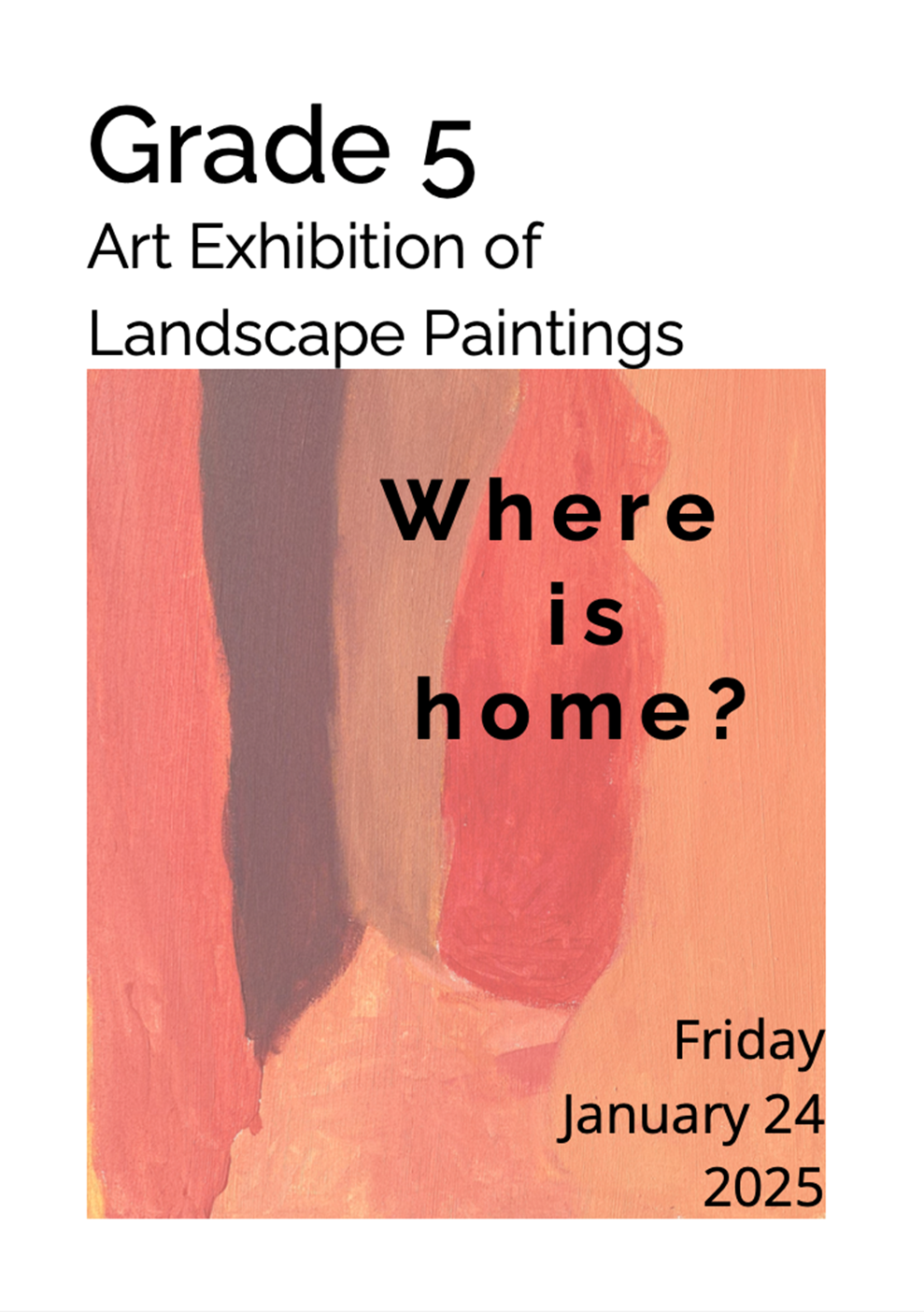
The final exhibition was presented at the ISU Festival of World Cultures, creating a visual tapestry of the school’s international diversity while allowing students to share aspects of their identities that aren’t immediately visible.
Click, here to view sample pages.
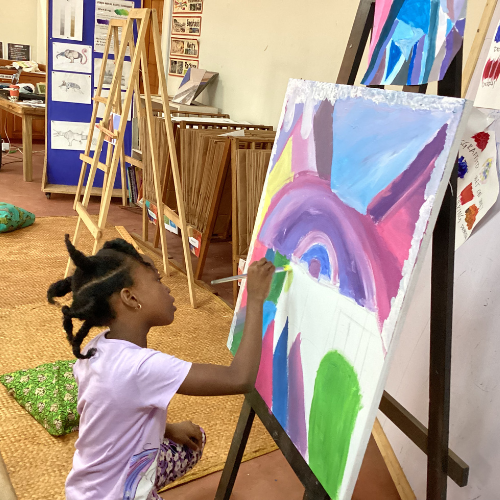
A grade 3 ISU student working on an abstract painting of a favourite place on the ISU campus.
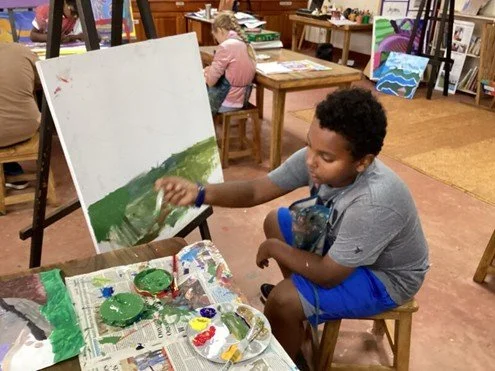
Students painting in Jill’s visual arts studio at ISU (above) and grade 5 landscape paintings from the “Where is Home?” unit
-
The Artist as Educator
Jill arrived in Uganda 20 years ago as a Fulbright Scholar in Makerere University’s Performing Arts Department. “I came to Uganda as a practicing artist—both visual and performing—and transitioned into education from there,” she explains. “My experience in teaching comes from a very strong arts background into education, not education to be an art teacher. So I think that’s a different inroad.”
This artist-first approach informs everything about her teaching philosophy. When discussing strengths of the International Baccalaureate’s Primary Years Programme (PYP) curriculum, Jill notes: “I’ve really loved working in the PYP because it is so flexible and open, and it allows for teachers to have a lot of agency in how they’re approaching the subject matter, and what lessons or units they decide to develop.”
Perhaps most powerfully, Jill models what it means to be a practicing artist alongside her students. During a recent Literacy Week at ISU, she worked on illustrations for her upcoming children’s book, The Brush, while her students tackled realistic art projects of their own.
“[The students] were really engaged in my process, and of course, I was also engaged in their process of drawing realistically,” Jill reflects. “Being vulnerable by sharing something that isn’t perfect yet, and that they had a say in some of the creative decisions I made – that kept the students excited.”